This hands-on udon-making class in Tokyo takes about two hours, including the meal. You make Sanuki udon from flour, salt, and water, then eat the noodles after they are boiled.
I lived in Kagawa for 18 years, and Sanuki udon became part of my everyday life there. In my workshop, I share not only the recipe but also why the dough is stepped on and what udon means to people in Kagawa.
01 — Start from scratch
Mix flour, salt, and water
Udon begins with just three basic ingredients. At first, the mixture is loose and floury. As you work it with your hands, it gradually comes together into one piece of dough.
Before we begin, I give a short introduction to Sanuki udon and Kagawa’s everyday udon culture. Then I demonstrate each step so you can follow along even if this is your first Japanese cooking class.
02 — The memorable part
Step on the dough
Once the dough comes together, it is protected inside a clean bag and pressed with the feet. Using body weight applies steady, even pressure to the firm dough and helps prepare its elastic texture.
I demonstrate the movement first, so beginners can take their time. If you want to understand the method in more detail, read why people step on udon dough.
03 — Make the noodles your own
Roll and cut the dough
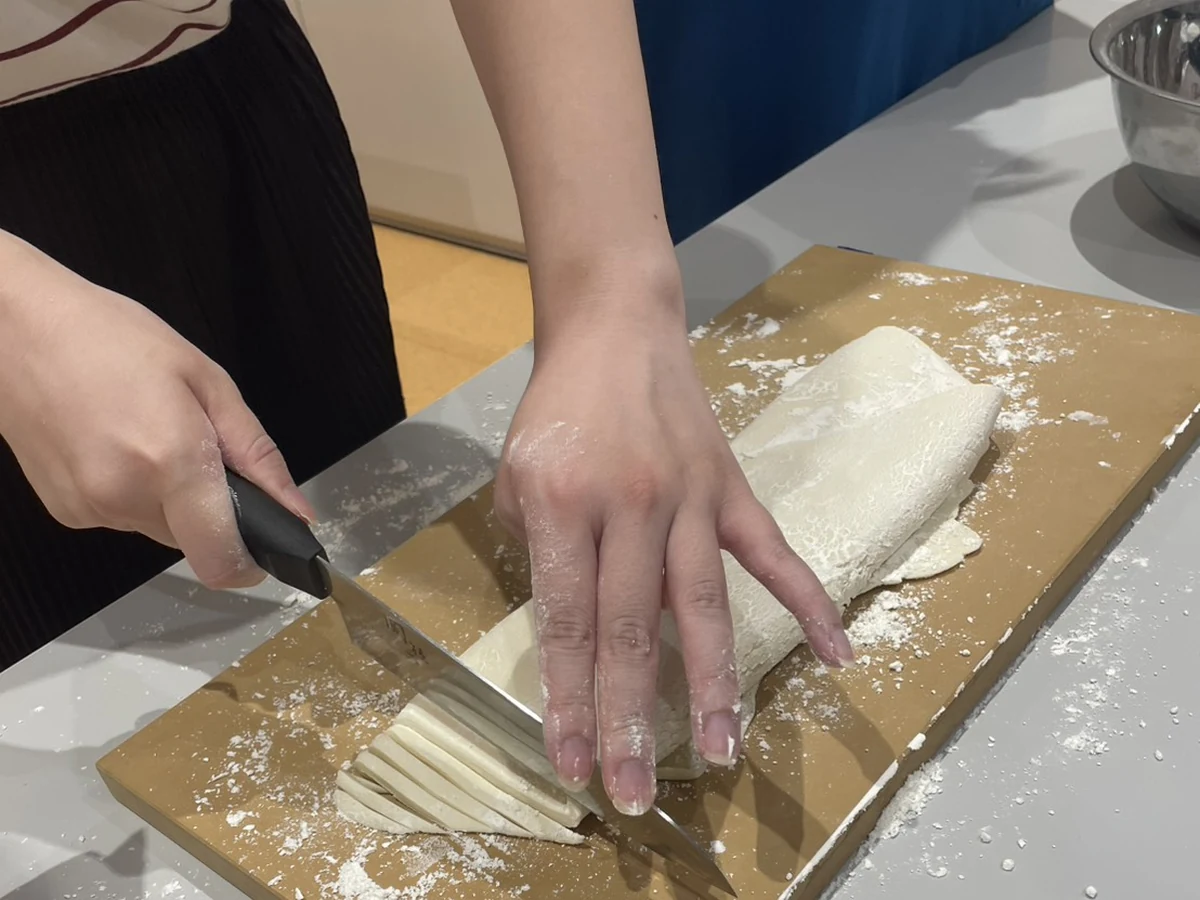
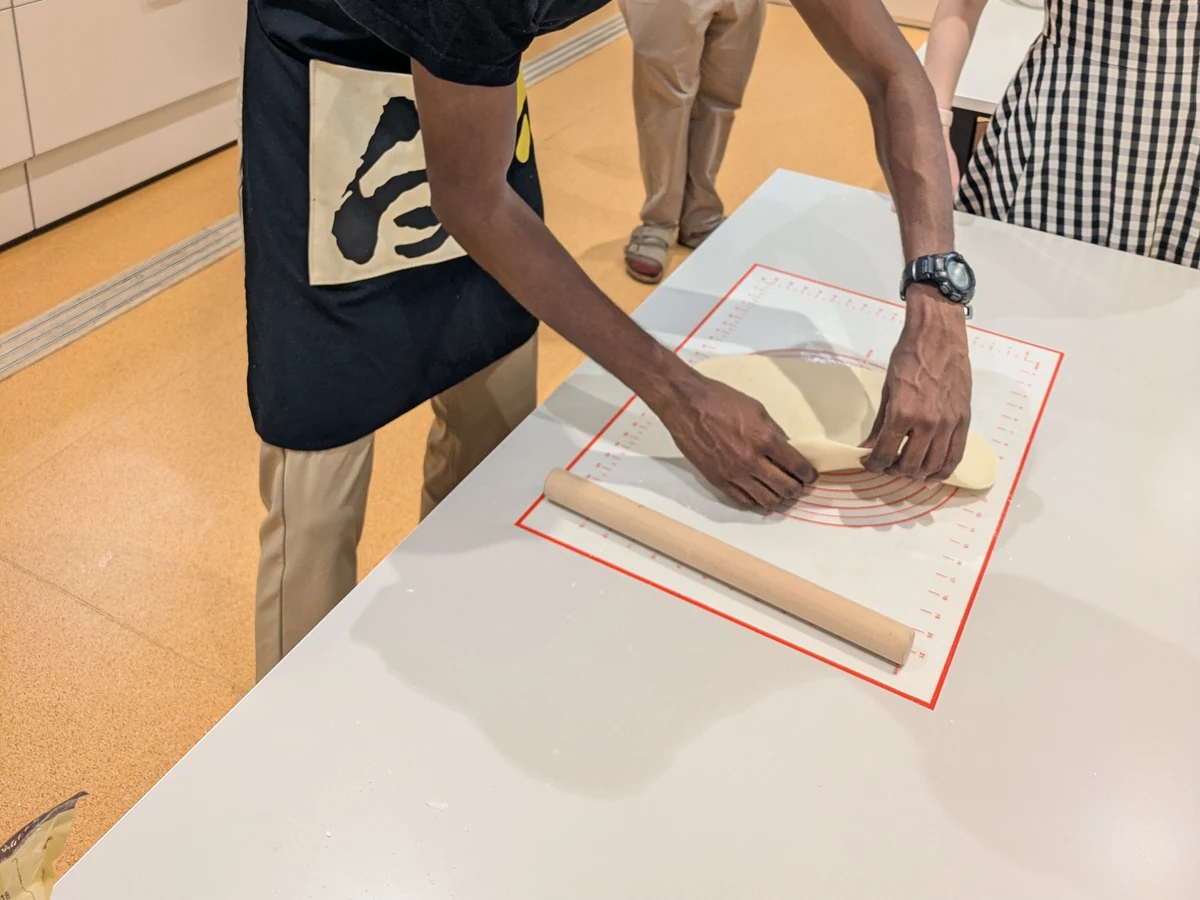
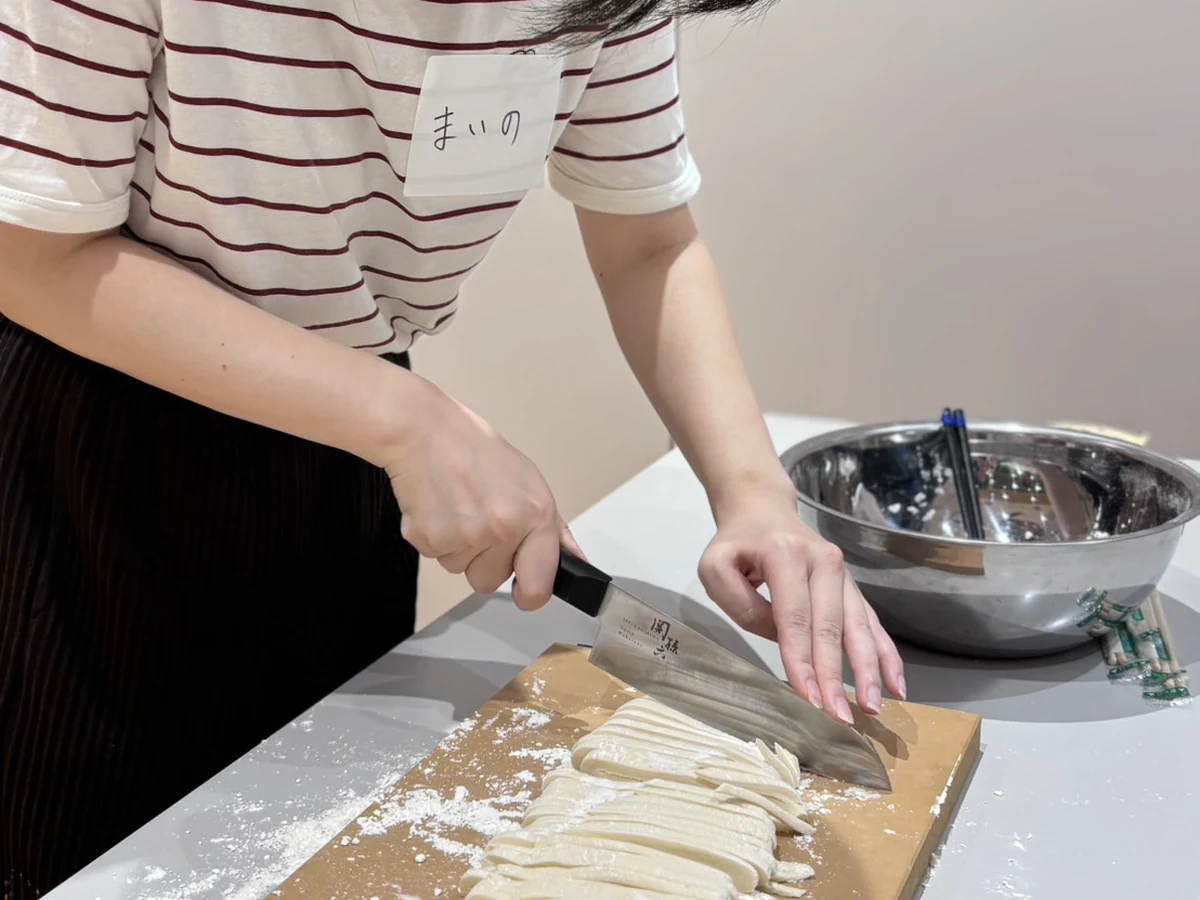
You roll the rested dough into a sheet, fold it, and cut it with a knife. Making every strand the same width is harder than it looks. A few thick or thin noodles are completely normal—and part of the pleasure of making them by hand.
04 — From your hands to the bowl
Boil and eat your handmade udon
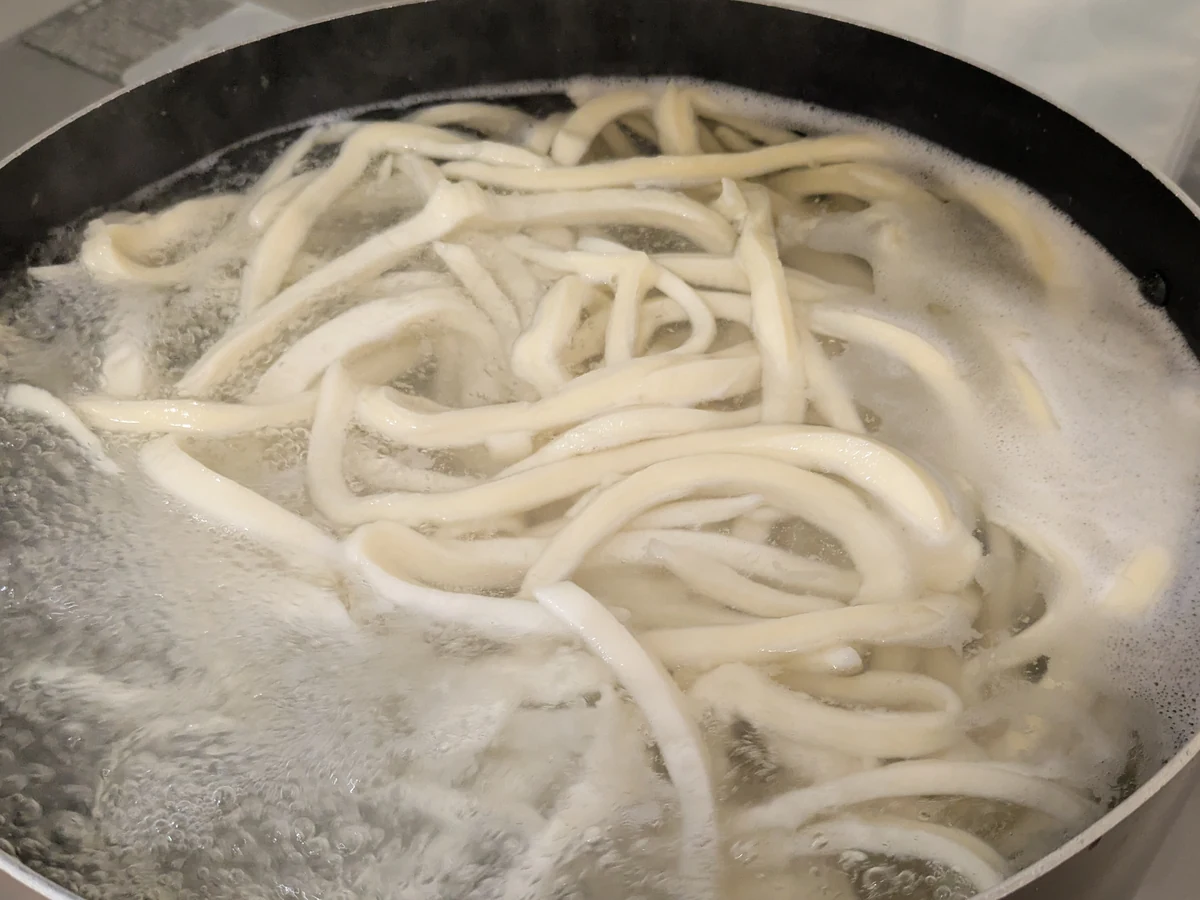
After cutting, the noodles go into boiling water. Then comes the best part: sitting down to eat the udon you made from the flour stage onward.
Hand-cut noodles do not have to look factory-perfect. Their small differences are a reminder that you made the bowl yourself, and you can enjoy it while it is freshly cooked.
Before you come
What to wear and how to plan your visit
Wear ordinary clothes that are comfortable for kneading, foot-stepping, and using a rolling pin. You do not need to buy special clothing for the class.
The workshop is held in Harumi, Chuo City, near the Tokyo Bay area. The exact address and meeting instructions are sent after your booking is confirmed. Harumi is close to Toyosu and Tsukishima, so the class can fit naturally into a day around the waterfront.
- Allow about two hours for making, cooking, and eating.
- Check your group size before choosing a booking package.
- Read the confirmation message for the address and meeting instructions.
- Leave travel time between the workshop and your next activity.
- Ask before booking if you have food allergies or dietary restrictions. Udon contains wheat.
Who can join?
Beginners and English-speaking travelers are welcome
You do not need cooking experience or Japanese language skills. I explain the process in English and demonstrate the movements while we work.
Solo travelers, couples, friends, and families are welcome. The small-group format gives everyone time to work at a comfortable pace.
Common questions
Frequently asked questions
How long is the udon-making class?
Allow about two hours, including making, boiling, and eating your udon.
Can I join if I have never cooked before?
Yes. Each stage is demonstrated and explained, so beginners can follow along.
Can solo travelers join?
Yes. Solo travelers are welcome, as are couples, friends, and families.
Is the class available in English?
Yes. The workshop is English-friendly and the host demonstrates each movement as you work.
Where is the workshop held?
It is held in Harumi, Chuo City, Tokyo. The exact address and meeting details are sent to confirmed guests after booking.
Make a bowl from scratch
Join a Sanuki udon workshop in Tokyo
Choose a package for your group and check the booking calendar for an available time.