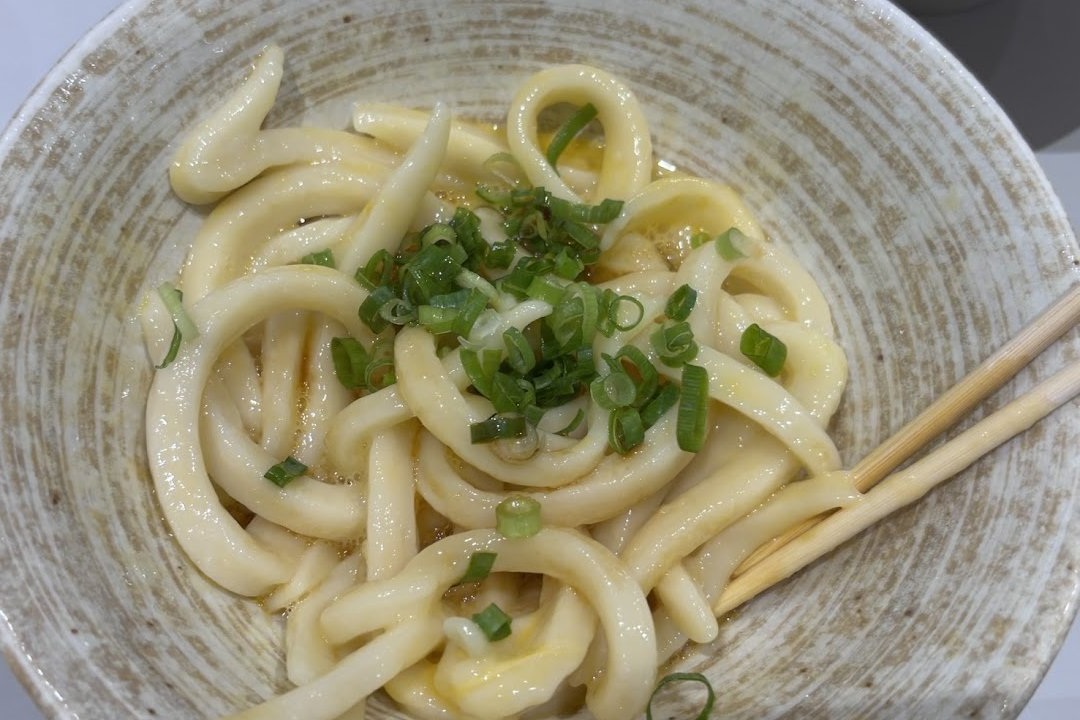
Sanuki udon is a regional udon tradition from Kagawa Prefecture on the island of Shikoku. “Sanuki” is the former name of Kagawa. The noodles are best known for their firm, elastic bite—called koshi in Japanese—along with a smooth surface and a clean wheat flavor.
Compared with softer udon styles, Sanuki udon puts more emphasis on the noodle’s resilient chew and the contrast between a smooth surface and firm center.
There is no single topping or broth that defines every bowl. Sanuki udon can be hot or cold, served in a light dashi broth, covered with a small amount of concentrated sauce, dipped, or dressed simply with soy sauce. What stays central is the noodle itself.
One tradition within a broad category
Sanuki Udon vs Other Udon: What Changes?
“Udon” is a broad category, not one single recipe. Sanuki udon is the Kagawa tradition within that category. It is especially associated with a firm, elastic bite and careful control of flour, salt, water, resting, and boiling. Simple bowls often let the noodles stand out.
Other regional udon styles may be softer, flatter, thinner, or served with different broths and toppings.
Compare the main types of udon, or see why Sanuki udon dough is traditionally stepped on.
The noodle comes first
What makes Sanuki udon different?
Udon is a broad family of Japanese wheat noodles. Sanuki udon is one regional expression of it, shaped by Kagawa’s ingredients, climate, working methods, and everyday eating culture.
A strong but pleasant chew
The Japanese word koshi is often translated simply as “chewiness,” but it is closer to resilience: the noodle yields when bitten, then seems to push back. Good Sanuki udon feels firm without being hard or rubbery.
A smooth, glossy surface
Sanuki udon should slide easily across the palate even while the center keeps its bite. That contrast—smooth outside, elastic inside—is part of what makes a simple bowl so satisfying.
Simple ingredients, careful control
The dough normally begins with only wheat flour, salt, and water. Because the ingredient list is short, hydration, salt balance, resting time, kneading, thickness, cutting, and boiling all matter.
Many ways to serve one noodle
A single shop may offer hot broth, cold dipping noodles, soy-sauce udon, kama-age, and egg-topped kama-tama. Comparing textures and serving styles is part of the pleasure.
A regional food system
Why did Sanuki udon develop in Kagawa?
Kagawa faces the Seto Inland Sea and has relatively little rainfall. Historically, parts of the Sanuki Plain were better suited to wheat than dependable rice production. The region also had access to salt, soy sauce, and iriko—small dried sardines used for dashi. Those elements came together in a food that was practical, affordable, and deeply local.
Over generations, udon became more than a special-occasion dish. It became everyday food: quick breakfasts, simple lunches, family meals, and a reason to travel from shop to shop. Kagawa is now affectionately called “Udon Prefecture,” and the experience of eating several small bowls at different shops is a form of local tourism in its own right.
The name comes from Sanuki Province, the historical name for the area that is now Kagawa Prefecture. The style is available across Japan today, but its cultural home remains Kagawa.
Technique creates texture
How Sanuki udon is made
The ingredients look simple. The craft lies in how the dough is treated.
- 1Mix flour with salted water. The amount of water and salt may change with temperature and humidity.
- 2Bring the dough together and knead it. This distributes moisture and begins developing the gluten structure.
- 3Step on the protected dough. Traditional foot-stepping applies even pressure to a firm batch without exhausting the hands.
- 4Rest the dough. Resting lets moisture equalize and allows the dough to relax before it is rolled.
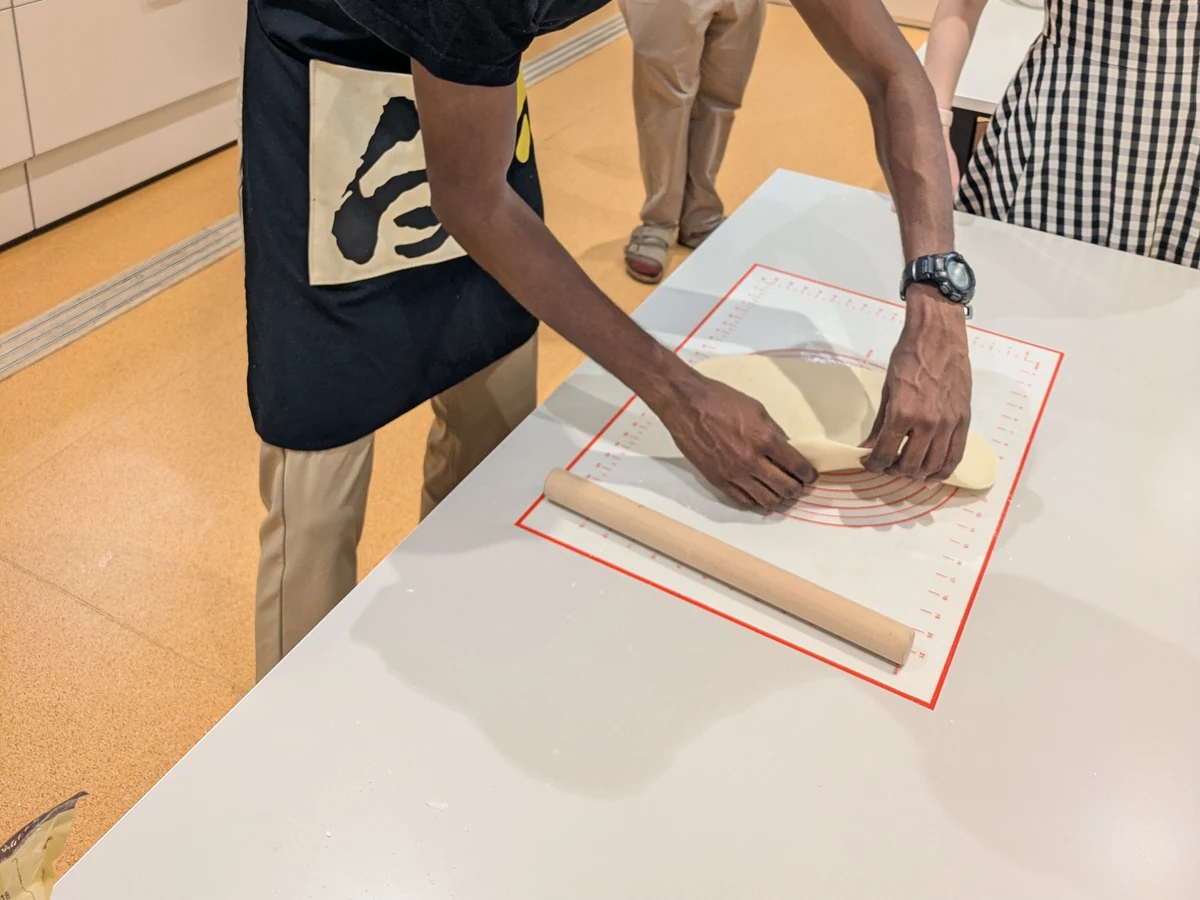
- 5Roll and cut the noodles. Even thickness helps the noodles cook consistently while keeping their characteristic bite.
- 6Boil in plenty of water. The finished texture depends on timing, then on whether the noodles are served straight from the pot or rinsed and tightened in cold water.
Foot-stepping is memorable, but it is not a trick performed for tourists. It is a practical method for working a stiff dough evenly. Kneading, stepping, and resting all contribute to gluten development and the texture associated with Sanuki udon.
One noodle, many bowls
Classic ways to eat Sanuki udon
If you are ordering for the first time, the vocabulary can seem complicated. These are some of the most common styles.
| Style | How it is served | Why choose it |
|---|---|---|
| Kake | Noodles in a light dashi broth, hot or cold | A balanced introduction to noodles and broth |
| Bukkake | A smaller amount of concentrated sauce poured over the noodles | More direct flavor with plenty of noodle texture |
| Shoyu | Soy sauce, often with citrus, grated daikon, or green onion | The simplest way to focus on the wheat and chew |
| Kama-age | Hot noodles served in their cooking water with dipping sauce | A soft, warm surface with a full wheat aroma |
| Kama-tama | Freshly boiled noodles mixed with egg and seasoned sauce | Rich, creamy, and comforting |
| Zaru | Cold rinsed noodles served with dipping sauce | A clear view of the noodle’s firmness and smoothness |
Bringing Kagawa to Tokyo
The Kagawa ingredients we use in our workshop
Our Tokyo workshop uses udon flour milled from Sanuki no Yume 2000, a Kagawa-original wheat variety developed specifically for Sanuki udon. It grew from a local ambition to make the prefecture’s best-known noodle with wheat connected to Kagawa itself.
For seasoning, we use soy sauce from Kamada Soy Sauce, a Kagawa company founded in Sakaide in 1789. We also source the salt used in our dough from Kagawa. Together, the flour, soy sauce, and salt give the workshop a real connection to the region rather than using “Sanuki” as a name alone.
This choice is also economic. Buying these ingredients from Kagawa producers and suppliers helps support the local businesses that continue to mill flour, make seasonings, and carry regional food knowledge forward. A workshop in Tokyo can still send part of its value back to the community whose culture it teaches.
Check workshop dates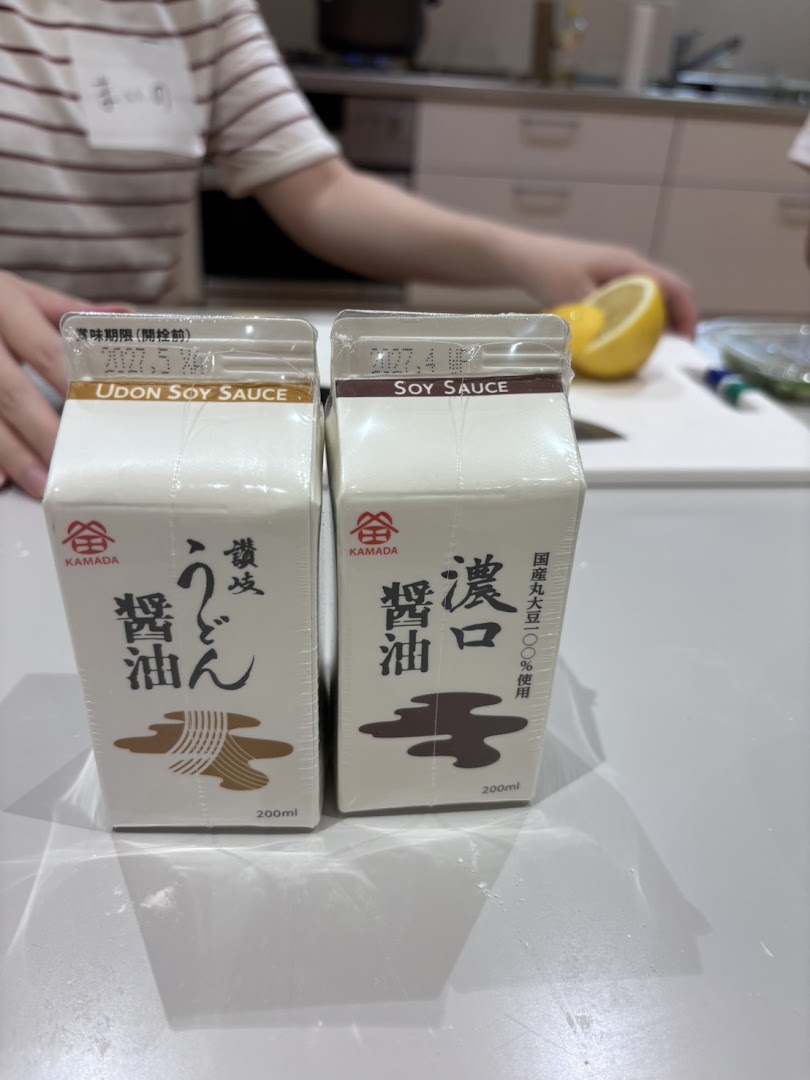
Taste before toppings
How to appreciate your first bowl
- Try a noodle before adding many condiments. Notice the wheat aroma, surface, thickness, and resistance when you bite.
- Compare hot and cold. Cold-rinsed noodles usually feel firmer; noodles served straight from the pot often feel softer and more aromatic.
- Keep the first order simple. Kake, shoyu, or zaru makes it easier to understand the character of the noodles.
- Expect variation. Thickness, salt, resting time, broth, and boiling differ by maker. There is no need for every good bowl to feel identical.
Before your first bowl
Frequently asked questions
What is the difference between Sanuki udon and regular udon?
Sanuki udon is the udon tradition associated with Kagawa Prefecture. It is especially known for strong koshi, a smooth surface, and simple serving styles that keep the noodles at the center. “Udon” itself is a much broader category with many regional forms.
Why is Sanuki udon so chewy?
The texture comes from gluten development and careful control of salted water, kneading, resting, rolling, and boiling. Foot-stepping is one traditional way to work the firm dough evenly.
Is Sanuki udon always served hot?
No. It may be hot or cold, served in broth, covered with concentrated sauce, paired with dipping sauce, or seasoned simply with soy sauce and condiments.
Is Sanuki udon vegetarian?
The noodles are generally made from wheat flour, salt, and water. However, many traditional broths and sauces contain fish-based dashi, often made with iriko. Ask about the broth and toppings if you need a vegetarian meal.
Can I make Sanuki udon in Tokyo?
Yes. Our small-group workshop in Harumi teaches the process from flour to finished bowl, including kneading, foot-stepping, rolling, cutting, boiling, and eating. Same-day reservations are possible whenever an open time remains in the booking calendar.
Learn by making
Turn the Kagawa story into your own bowl
Make Sanuki udon from scratch in Tokyo with a Kagawa-local host and ingredients supplied from Kagawa.