
Four shops, all walkable from Takamatsu Station
4 Sanuki Udon Shops I Tried Near Takamatsu Station in Kagawa, Japan
A practical, no-car food walk through four very different bowls, from citrus-bright udon to generous pork bukkake.
You do not need a rental car to start eating well in Japan’s udon prefecture. Takamatsu is compact, the center is flat, and several memorable bowls are within walking distance of JR Takamatsu Station. On this trip, I visited four shops that showed me just how broad the world of Sanuki udon can be.
I was born in Takamatsu and lived in Kagawa for 18 years. I have eaten at more than 100 udon shops, graduated from an udon school in 2013, and now run a Sanuki udon-making experience in Tokyo. Even with that background, returning to Kagawa is never a matter of finding one “correct” bowl. Every shop makes a different choice about noodle texture, broth, toppings and service.
This guide is for first-time visitors who want a realistic Takamatsu udon walk: what each shop is good at, what I ordered, how the ordering system works, and which bowl may suit you best. If this is your first encounter with the regional style, start with what makes Sanuki udon different.
Why Takamatsu Is Easy to Explore Without a Car
Many famous rural udon shops in Kagawa are easiest to reach by car, but Takamatsu gives rail travelers a useful alternative. JR Takamatsu Station, Takamatsu Castle, the covered shopping arcades and Kotoden stations sit within the same central area. You can eat one small bowl, walk to the next neighborhood, and build sightseeing into the gaps.
The main difficulty is timing. Udon in Kagawa is often a breakfast or lunch food, and some shops close as soon as their noodles sell out. Begin early, check the current schedule on the morning of your visit, and resist ordering the largest size at your first stop. There is no need to fit every shop into one day.
At a Glance: Which Udon Shop Is Right for You?
| Stop | What I ate | Best for | From JR Takamatsu Station |
|---|---|---|---|
| Sakaeda Udon Minamishinmachi | Cold sudachi udon | A light, citrus-bright bowl | 21 min / 1.4 km |
| Ueta Udon | Cold meat bukkake | Softer noodles with a substantial topping | 11 min / 750 m |
| Men-dokoro Wataya | Pork bukkake | Big appetite and generous pork | 23 min / 1.6 km |
| Udon Ichiba | Sudachi zaru with vegetable and chicken tempura | A varied, refreshing plate | 10 min / 650 m |
All walking times are Google Maps estimates from JR Takamatsu Station, checked September 4, 2026. They are not times between shops. Allow extra time for crossings and stops.
Before You Order: A Quick Guide to Sanuki Udon
The menu may ask you to make several choices quickly: hot or cold noodles, hot or cold broth, and small, medium or large. Kake usually means noodles in a fuller bowl of broth. Bukkake uses a smaller amount of more concentrated sauce poured directly over the noodles. Zaru is served cold with dipping sauce on the side. Our visual guide to kake, bukkake and other udon styles can help before you go.
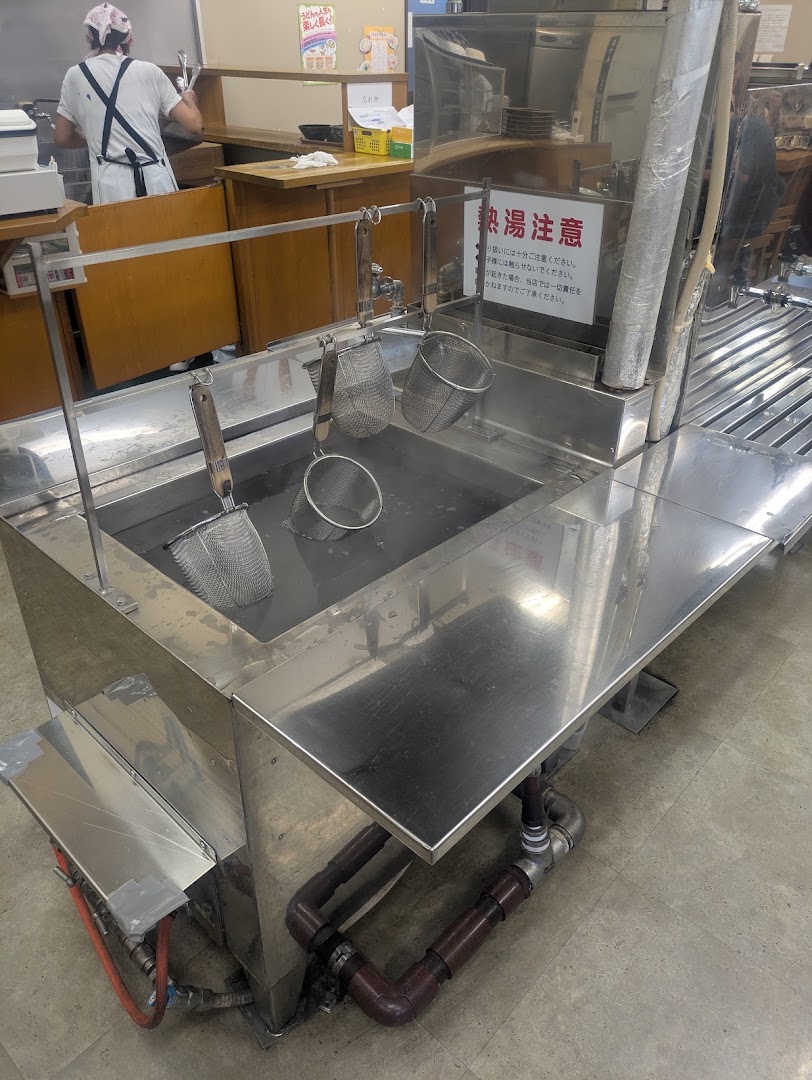
At a self-service shop, watch the customer ahead of you. You may order noodles first, take tempura or rice dishes from a counter, add broth or condiments yourself, and pay at the end. At a fully self-service noodle shop, you may even warm the noodles in a wire basket. None of this is a test. A simple “small” plus the menu name, pointing politely if needed, is usually enough.
Four Udon Stops Around Takamatsu Station
1. Sakaeda Udon Minamishinmachi — cold udon brightened with sudachi
- Address
- 4-6 Minamishinmachi, Takamatsu
- Walk
- 21 minutes / 1.4 km from JR Takamatsu Station (Google Maps, September 4, 2026)
- Hours
- 7:00 a.m.–5:00 p.m.; closed January 1
- Order
- Cold sudachi udon
- Ordering
- Self-service: order at the counter and follow the shop’s queue and signs.
Walking directions from JR Takamatsu Station
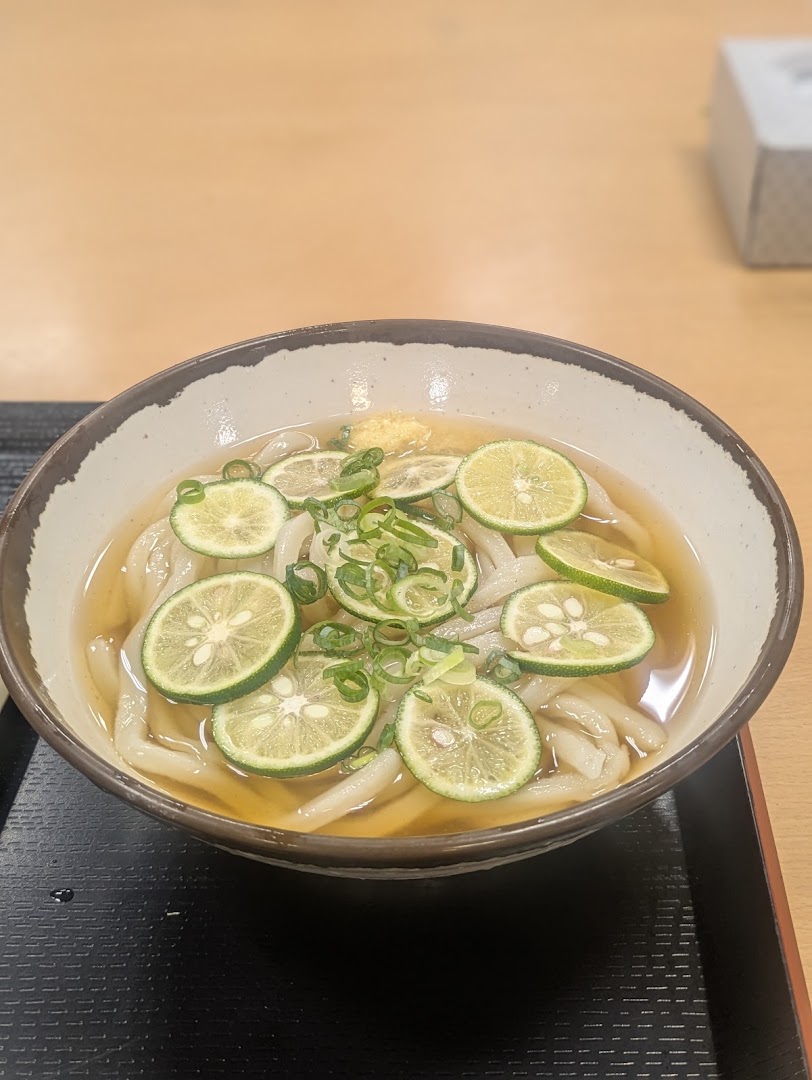
At Sakaeda, I ordered cold udon topped with sudachi. The photographed bowl is spare and summery. Thin slices of green citrus cover the surface, with chopped green onion as the only other visible topping. Served cold, this style shifts attention away from rich meat or tempura and toward the noodles, the chilled broth and the citrus aroma. Sudachi is a small Japanese citrus fruit, and this bowl puts it at the center of the presentation.
This is an option for travelers who want a citrus-topped first bowl or anyone visiting in humid weather. It is not the bowl to choose if your priority is a heavy meal. Its value in this route is contrast: citrus, cold broth and restraint before the more substantial pork and tempura bowls ahead.
2. Ueta Udon — cold meat bukkake with softer noodles
- Address
- 1-8 Uchimachi, Takamatsu
- Walk
- 11 minutes / 750 m from JR Takamatsu Station
- Hours
- 9:38 a.m.–2:30 p.m. (last order); closed Sunday
- Order
- Cold meat bukkake
- Ordering
- Self-service: choose any side dishes first, order your udon, then pay.
Walking directions from JR Takamatsu Station
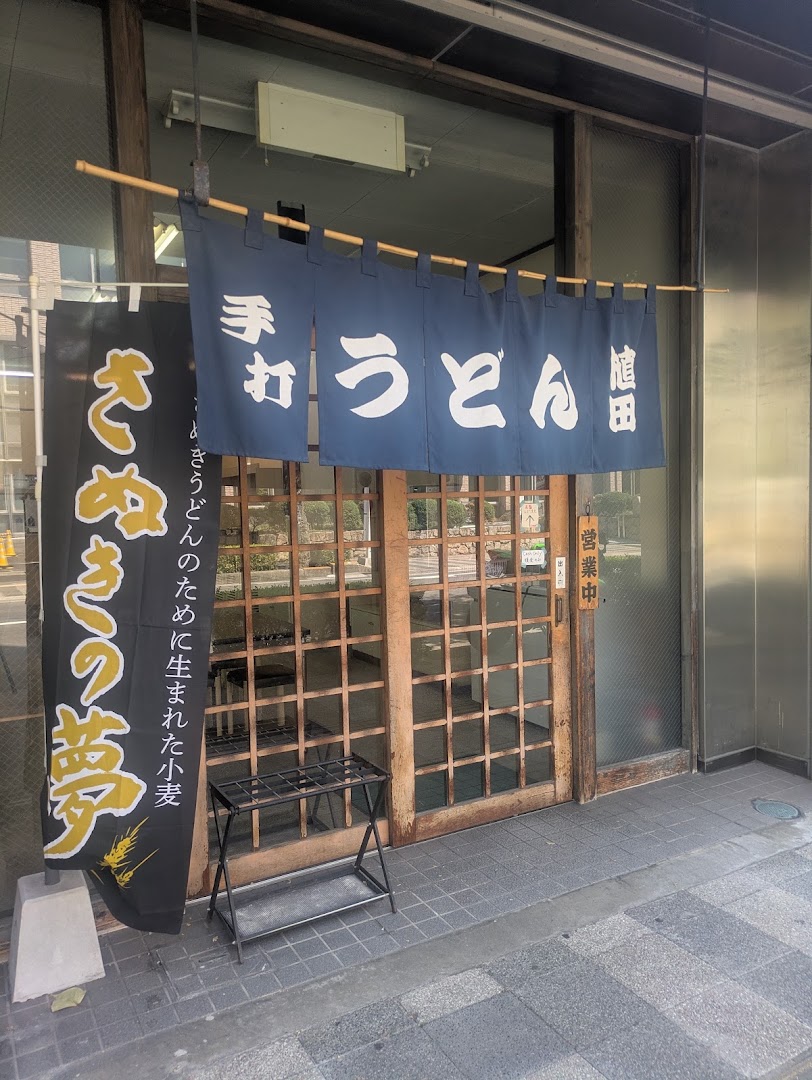
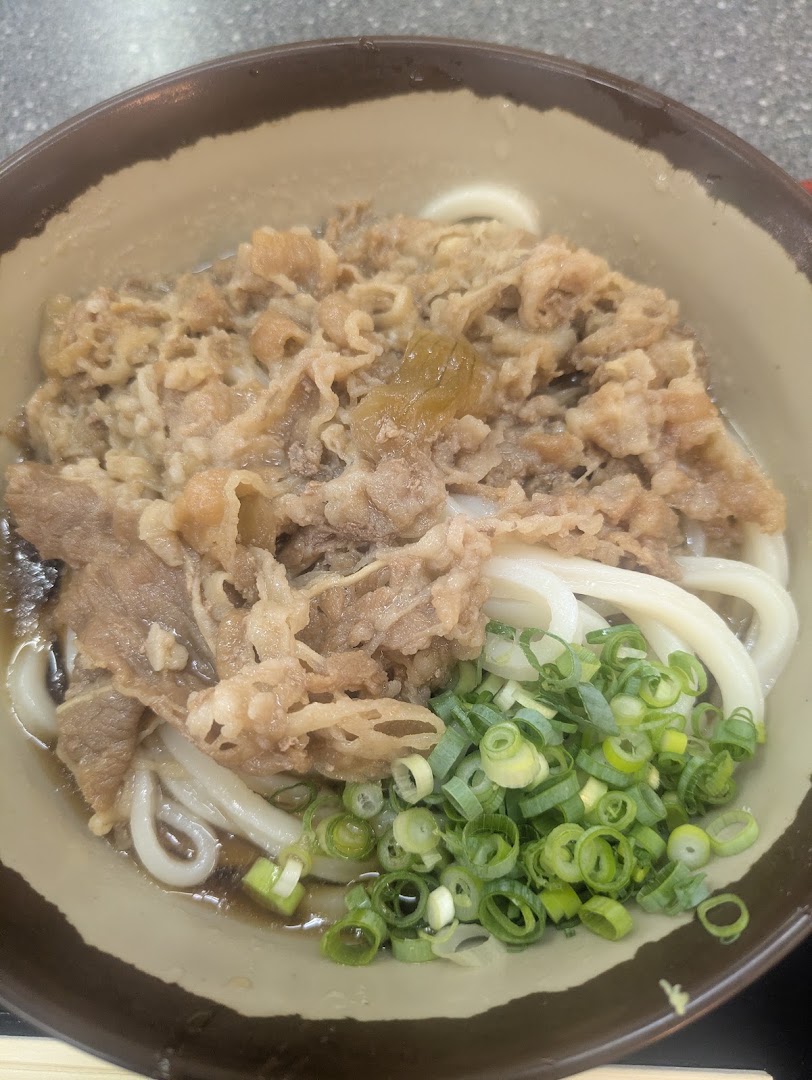
Ueta is easy to miss if you are looking for a large restaurant sign. The entrance is narrow, with a white noren curtain and handwritten notices that feel closer to an everyday neighborhood shop than a destination designed for tourists. That is part of its appeal. From the station, the walk carries you past Takamatsu’s castle-side business district and into a part of the center that locals use for ordinary lunches.
The bowl in the photograph is cold meat bukkake: pale noodles under thin slices of simmered meat and chopped green onion, eaten with a smaller amount of concentrated sauce. The noodles were on the softer side. For anyone who expects every bowl of Sanuki udon to be aggressively firm, this is a useful reminder that texture varies greatly from shop to shop. The cold noodles feel gentle rather than hard, while the meat gives the bowl weight and a sweet-savory richness.
I would send a first-time visitor here when they want a recognizably local shop without traveling into the countryside. The portion and meat make it a more complete lunch, so choose a small size if this is one stop in a longer crawl.
3. Men-dokoro Wataya Takamatsu — pork bukkake after my first choice sold out
- Address
- 8-11 Minamishinmachi, Takamatsu
- Walk
- 23 minutes / 1.6 km from JR Takamatsu Station
- Hours
- 8:30 a.m.–2:00 p.m. last order; closed Sunday and public holidays
- Order
- Pork bukkake
- Ordering
- Self-service: order at the counter and follow the shop’s queue and signs. Cash only; may close when sold out.
Walking directions from JR Takamatsu Station
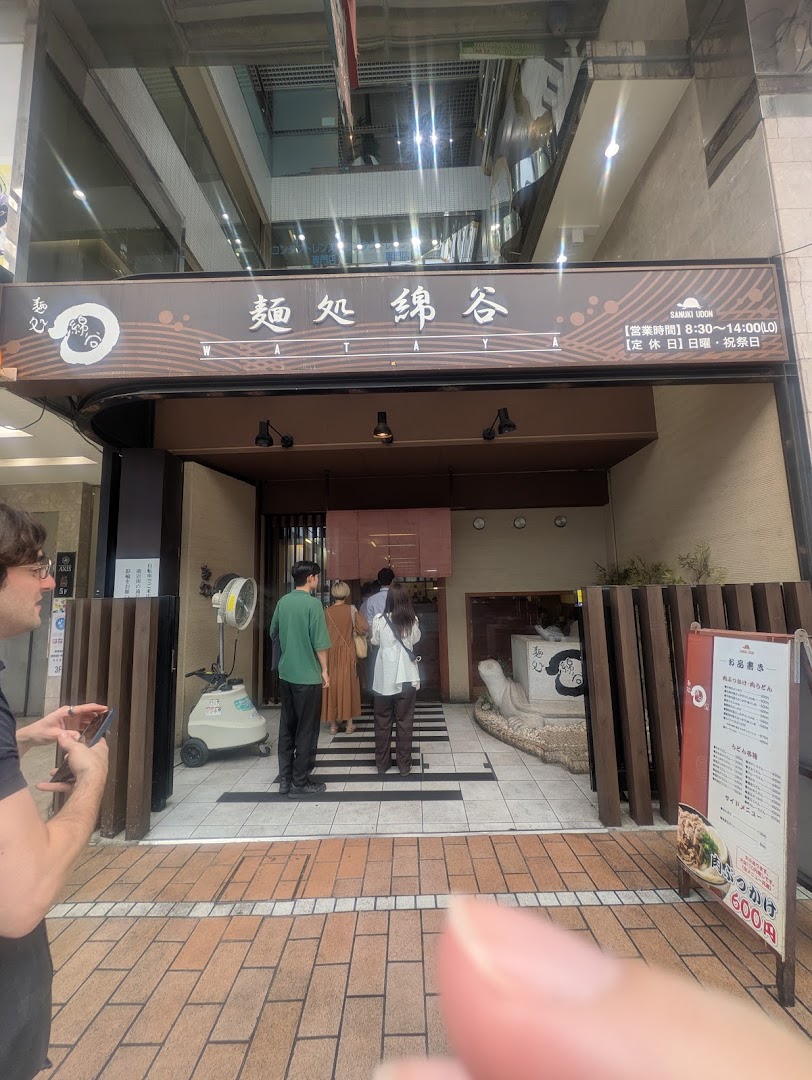
September 2026 closure: Wataya has announced that both shops will be closed September 20–27. Check the official website before visiting.
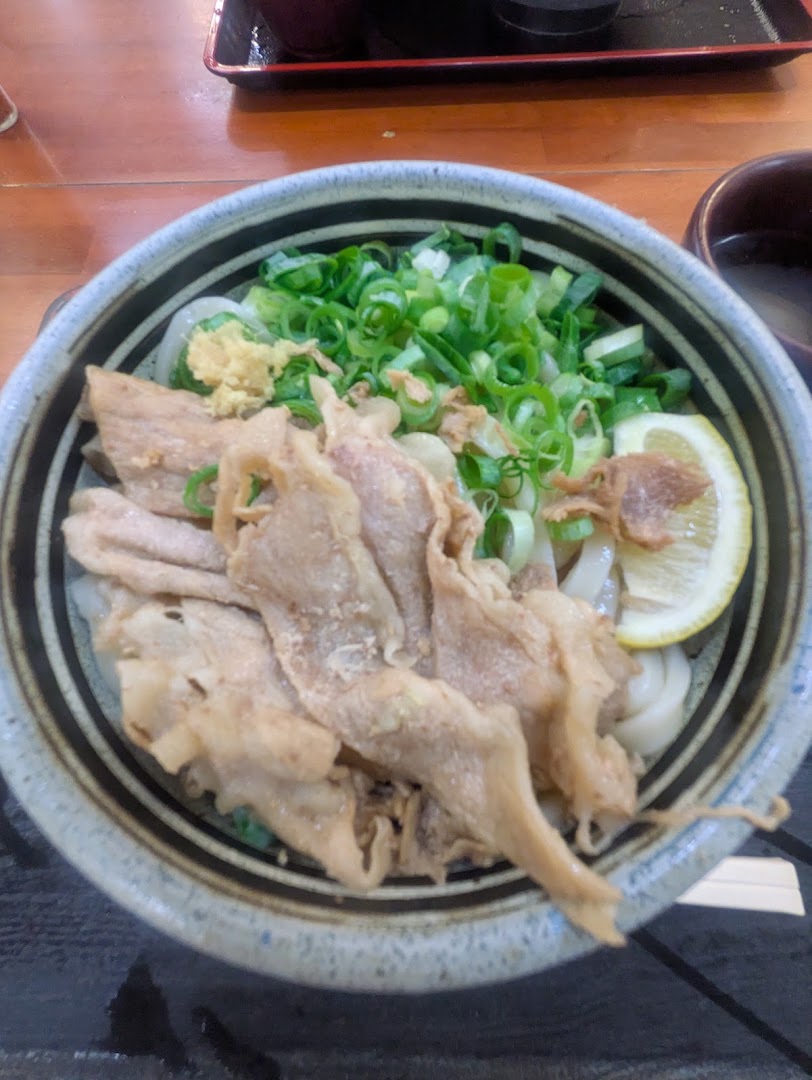
I originally wanted to order Wataya’s meat bukkake, but it had already sold out. I chose the pork bukkake instead. The photographed bowl arrives with overlapping slices of pork that nearly hide the noodles. Grated daikon and green onion add freshness around the edges. This is not the minimalist bowl you order only to study flour and dashi; it is lunch for someone who is genuinely hungry.
Bukkake uses less liquid than kake udon, so each noodle carries a more concentrated seasoning. What stood out to me was the thick, pleasantly chewy texture of Wataya’s noodles. They paired beautifully with the pork, and each mouthful of noodles and meat felt substantial. Together, the generous pork and chewy noodles made this an immensely satisfying bowl.
Wataya is best for big appetites, travelers who enjoy sweet-savory meat, and anyone who wants an obvious contrast with a plain kake or citrus bowl. It is also a useful stop on a shopping-arcade walk. If you are eating at several shops, share a bowl where permitted or order the smallest size—the topping makes this one feel larger than it first appears.
4. Udon Ichiba Hyogomachi — sudachi zaru with vegetable and chicken tempura
- Address
- 2-8 Hyogomachi, Takamatsu
- Walk
- 10 minutes / 650 m from JR Takamatsu Station
- Hours
- Monday 11:00 a.m.–4:00 p.m.; Tuesday–Saturday 11:00 a.m.–8:00 p.m.; closed Sunday
- Order
- Sudachi zaru with vegetable and chicken tempura
- Ordering
- Self-service: order at the counter and follow the shop’s queue and signs.
Walking directions from JR Takamatsu Station
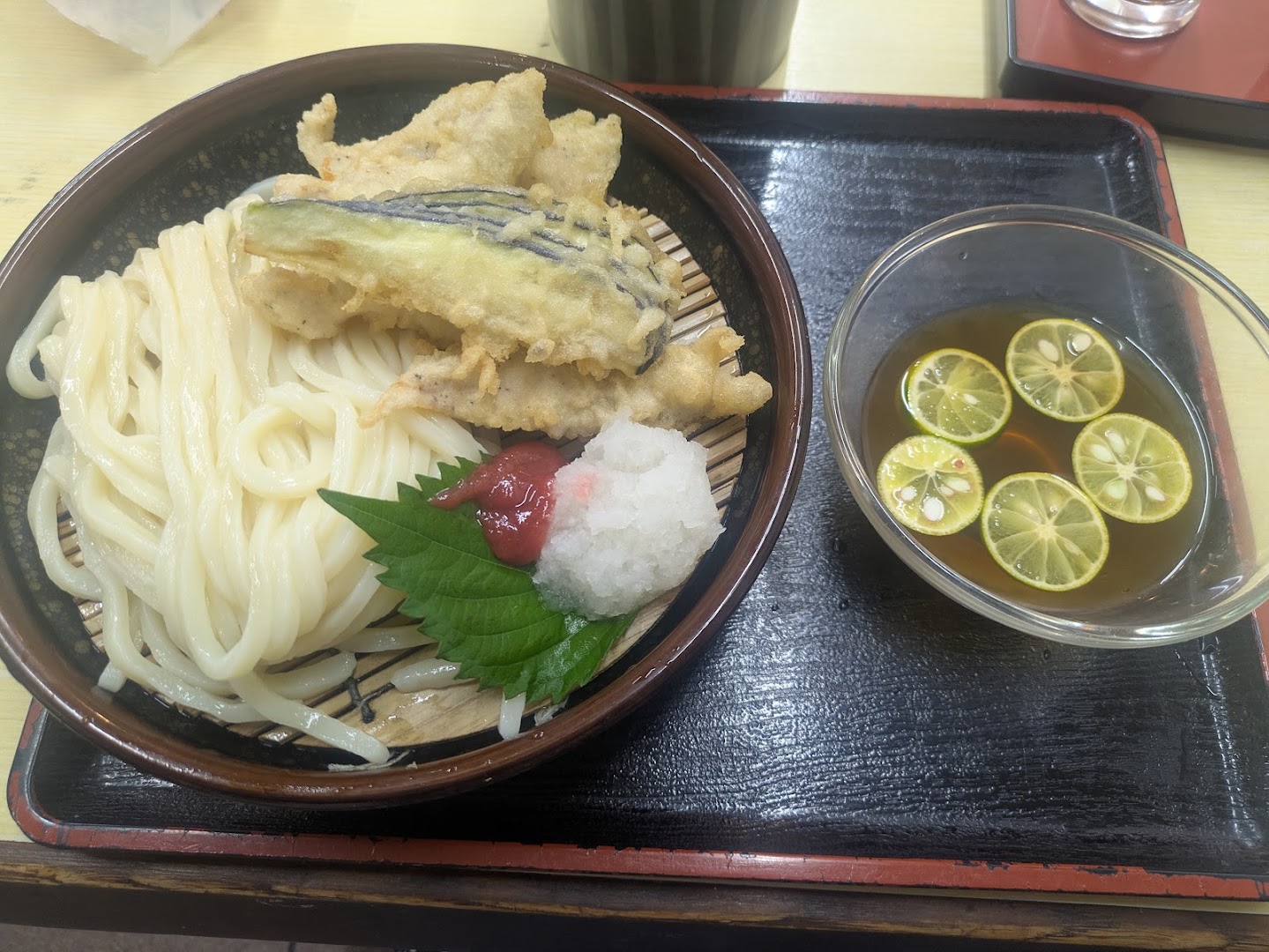
This plate from Udon Ichiba gives the walk a completely different visual rhythm. The noodles sit in a shallow brown bowl, with vegetable tempura and chicken tempura arranged on top. Grated daikon, a green shiso leaf and ume add several possible accents. Beside the bowl is a glass cup of clear dipping broth with half a sudachi.
I ate sudachi zaru udon with vegetable tempura and chicken tempura. Alongside the noodles were grated daikon, shiso and ume (plum), with sudachi in the separate dipping broth. This combination offered another way to enjoy udon after the meat-topped bowls at Ueta and Wataya.
This is also one of the most photogenic plates among the four bowls I tried.
A Practical Walking Route from Takamatsu Station
You do not need to eat at all four shops in one day. Choose two or three to match your appetite, and plan around the earlier closing times. Sakaeda and Wataya are both in the Minamishinmachi shopping arcade.
- Sakaeda for an early start. The Minamishinmachi branch opens at 7:00 a.m.
- Wataya before its early finish. It is in the same shopping arcade; last orders are at 2:00 p.m., and noodles can sell out.
- Ueta before mid-afternoon. Its listed last-order time is 2:30 p.m.
- Udon Ichiba for more flexibility. It opens at 11:00 a.m. and stays open later Tuesday–Saturday; Monday closes at 4:00 p.m.
What the Four Bowls Taught Me About Sanuki Udon
The point of an udon walk is not to crown one universal winner. The same basic ingredients can become citrus-bright cold udon, softer noodles with meat, a pork-heavy bukkake or a composed sudachi zaru with two kinds of tempura. “Best udon in Takamatsu” only becomes a useful question after you decide what kind of experience you want that day.
- Choose Sakaeda for a light bowl brightened with sudachi.
- Choose Ueta for softer noodles with cold meat bukkake.
- Choose Wataya when appetite and generous pork matter most.
- Choose Udon Ichiba for vegetable tempura, chicken tempura and sudachi zaru.
Texture is the thread connecting them. The springiness often described as koshi is not simply hardness; it is how a noodle resists, bends and returns as you bite. Temperature, resting and handling all affect that feeling. If you are curious about one of Kagawa’s most distinctive techniques, read why udon dough is traditionally stepped on.
Continue the story in Tokyo
Back in Tokyo? Make the Noodles Yourself.
If tasting udon in Kagawa made you curious about the dough, join our small-group Sanuki udon workshop in Tokyo and learn the process from flour to bowl.
Explore the Sanuki udon-making experienceFrequently Asked Questions
Can I eat good udon in Takamatsu without renting a car?
Yes. The central shops in this guide are intended to be reached on foot from JR Takamatsu Station. Some of Kagawa’s famous countryside shops need a car, but they are not required for a rewarding first udon day.
How many udon shops can I realistically visit in one day?
Choose one or two first, then add another only if you still have room. Wataya in particular was very filling. Check same-day opening information because noodles may sell out.
Do I need to speak Japanese at a self-service udon shop?
No. Learn the dish name and size, point to the menu if needed, and watch the customer ahead of you. Staff are used to a quick ordering rhythm, but a polite pause is better than pretending to understand.
Should I choose hot or cold udon?
Cold noodles often make their firmness easier to notice. Hot broth is comforting and shows how the noodle changes as it sits. Try one of each if you are visiting more than one shop.
Shop details and Google Maps walking routes checked September 4, 2026. Hours, closures and menu availability can change. Sources: Sakaeda shopping-street listing, Kagawa’s Ueta listing, Wataya official shop information, and Udon Ichiba official shop information. Dish descriptions reflect what I ate, not a guarantee that the same combination will be on the current menu.